
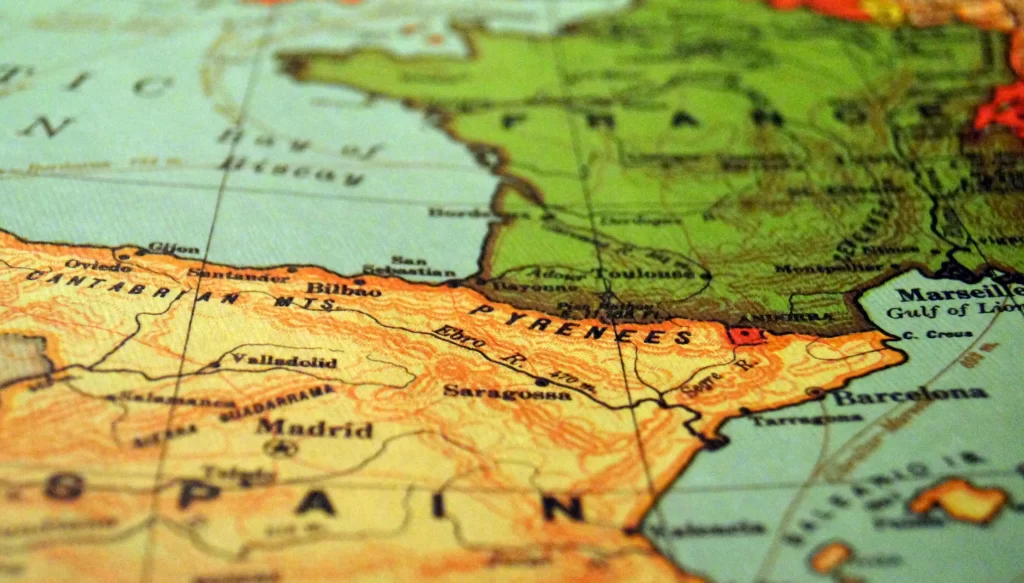
Imagine you’re lost in the Alps. It’s cold, visibility is poor, and your team is looking to you for direction. You dig through your pack and find a map—only to realize it’s for the Pyrenees, hundreds of miles away.
What do you do?
Oddly enough, that map may still help. It won’t get you home, but it might get you moving. And movement, not perfection, is often what matters most in uncertain conditions.
This is where many industries and companies find themselves today—navigating rapid, multidirectional change with limited clarity. Everyone wants a roadmap. Most would settle for a rough sketch and a pointer in the right direction.
This Is Where Thought Leadership Comes In
At its core, thought leadership is about providing enough clarity for others to move forward. An insight that gets teams talking, an idea that reframes a challenge, a perspective that sparks momentum—these are the signposts people are looking for.
This is the third and final piece in our series on what thought leadership is, how it works, and why it matters. In Part 1, we unpacked the nature of a “thought.” In Part 2, we addressed the realities of “leadership.” Now we bring the pieces together.
Our goal is simple: define thought leadership in a way that can drive meaningful strategy.
Leadership as Sensemaking
Pardon me if my Ph.D. shows a little here. I’m going to borrow a key concept from organizational researcher Karl Weick: **sensemaking**. It’s one of the most important things leaders do to keep an organization moving forward in a crazy world.
Leadership, Weick argues, isn’t about having all the answers—it’s about helping people make sense of complexity. To use my opening analogy, even a flawed map can serve as a catalyst for action. It gives people a reason to engage, to ask questions, to build context. It activates exploration. And that’s the point.
In volatile environments, standing still is not an option. Teams need confidence and direction—however imperfect—to begin solving problems. That’s the real value of leadership: enabling forward motion in the face of uncertainty.
Thought leadership plays the same role. It doesn’t promise certainty. It offers tools: a framework, a mental model, a new line of inquiry. These help your audience understand the world a little better—and act with more clarity.
A Working Definition
So here’s the working definition we use with clients:
Thought leadership is the process of providing others with tools to make sense of a changing world and their own situation.
It’s not about having the definitive answer. That sounds like “marketing.” True thought leadership respects the audience’s intelligence. It invites them into a conversation. It equips them to take their own next step—whether that’s pushing a new strategy forward, justifying investment, or rethinking how they compete.
A strong thought leadership program builds from that definition. It starts by identifying the situations your audience is trying to make sense of—and then mapping those to the tools you can offer.
Each piece of content—be it a keynote, a blog post, or a white paper—should deliver a tool to a specific audience segment to address a pressing issue.
This isn’t just good thought leadership. It’s smart marketing. There’s no shame in including a clear call to action. But the best content earns the right to sell by first offering real strategic value. That’s what makes people want to keep listening—and keep coming back.